
How Long Does a Wood Fence Last in Seattle? A Puget Sound Lifespan Guide
What actually decides how long a cedar fence lasts in Seattle's wet climate — posts, ground contact, fasteners and finish — plus the build choices that add years, from steel posts to rot boards.
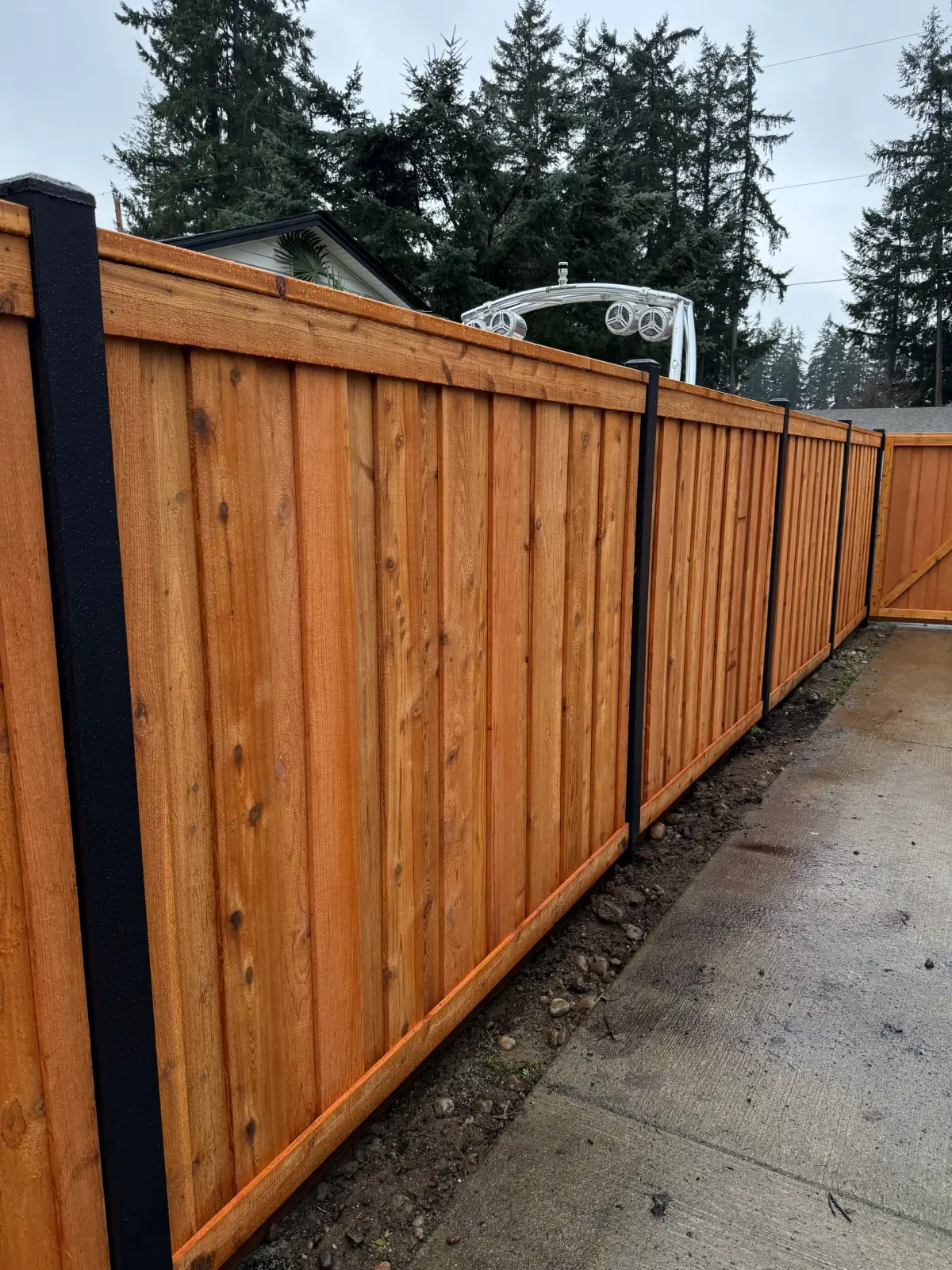
Ask five people how long a wood fence lasts and you'll hear five numbers. The honest answer for the Seattle area is that the fence lasts as long as its weakest part, and in our climate that is almost always the post at the ground line. Here's what the published research says, why Puget Sound weather changes the math, and which build choices you can make on day one to push your fence toward the long end of the range.
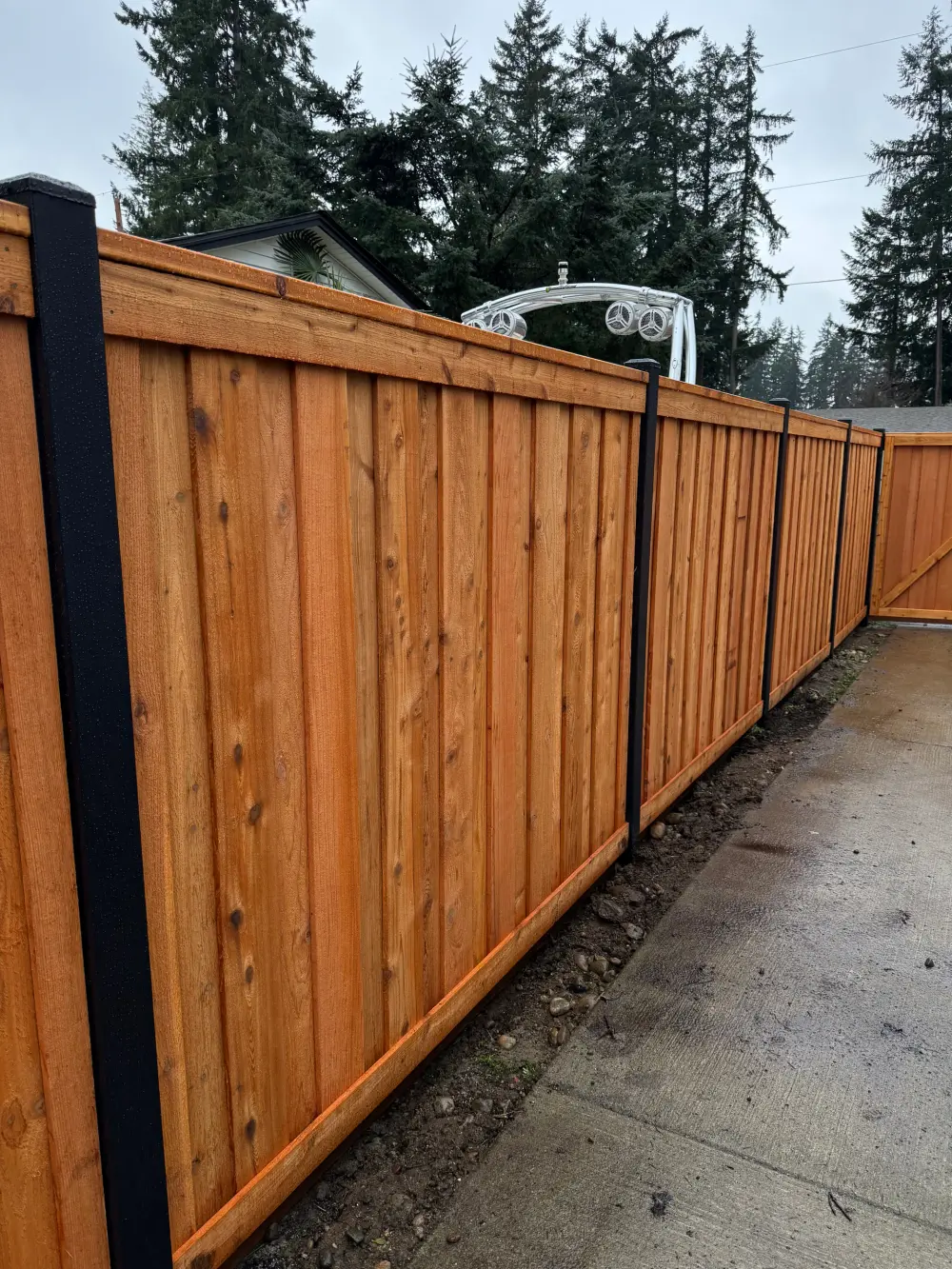
A MyFence build in Kent: pre-stained cedar panels on black steel posts, with a rot board along the bottom.
The short answer
There is no single number, but there is a pattern:
- Cedar boards above ground hold up well. The Seattle Times' guide to fence care puts cedar, the most common Northwest fence wood, at roughly 15–30 years, and notes that panels typically outlast posts because panels shouldn't touch the ground (The Seattle Times).
- Wood posts in the soil are the weak link. Research from the USDA Forest Products Laboratory calls the post "the critical link" in a fence and names decay as the main reason posts fail (USDA FPL, Protecting Wood Fences for Yard and Garden).
- The build decides where you land in the range. Ground contact, drainage, fasteners and finish move a fence from the bottom of that range to the top far more than the calendar does.
The one-sentence version
If you want a wood fence to last in Seattle, keep wood out of the dirt, keep water moving away from the posts, use fasteners that won't corrode, and keep a finish on the cedar.
What the published lifespans actually say
Most lifespan numbers online are contractor estimates. That doesn't make them wrong, but it's worth knowing which figures come from testing and which come from experience. Here are the ranges we could trace to a named public source:
| Component | Published range | Source and conditions |
|---|---|---|
| Cedar fence (Northwest) | 15–30 years | Seattle Times fence-care guide; panels usually outlast posts |
| Untreated split western redcedar posts | 8–24 years | USDA FPL; "depending on climate" |
| Pine posts pressure-treated for ground contact | 30–40 years | USDA FPL; based on field tests in southern Mississippi |
| Untreated pine posts | about 3 years (South) to 6–12 years (dry West) | USDA FPL |
Two things jump out:
- Cedar's range for posts is much wider than for boards. The same wood that does well as a fence board does worse buried in wet soil.
- Treatment beats species underground. A post treated and stamped for ground contact is designed to live in soil. The USDA bulletin warns that lumber labeled "above ground use only" should never be used as a post (USDA FPL).
Read the fine print on any lifespan number
The USDA bulletin is a 1979 Forest Products Laboratory publication, and its treated-post figure comes from Mississippi test plots. It's still one of the clearest public explanations of why fences fail, but no published range is a promise for your yard. Your soil, shade, drainage and build quality matter more than any average.
Why Seattle is harder on fences
Decay fungi need two things: moisture and oxygen. The USDA explains that decay is worst right at the ground line, where soil moisture meets air (USDA FPL). The same bulletin lists the Pacific coast of Washington and northern Oregon among the regions where decay of above-ground fence parts is greatest. Western Washington's long, damp season from fall into spring puts every fence in the region on the harder end of the scale.
Here's how that plays out on a typical Puget Sound lot:
- Fences stay wet for months. On north-facing runs and under big conifers, boards and posts may not dry out between storms from fall through spring.
- Clay-heavy soil holds water. The USDA notes that gravel around a post helps drainage in light soils but can trap a pool of water around the post in clay soils (USDA FPL). A lot of yards in our area have dense, slow-draining soil.
- Moss, leaves and mulch hold moisture against wood. Anything piled at the base of a fence acts like a wet sponge on the bottom boards and posts.
- Sprinklers and downspouts add water in the dry months. A fence line that gets watered every summer morning never gets a real break.
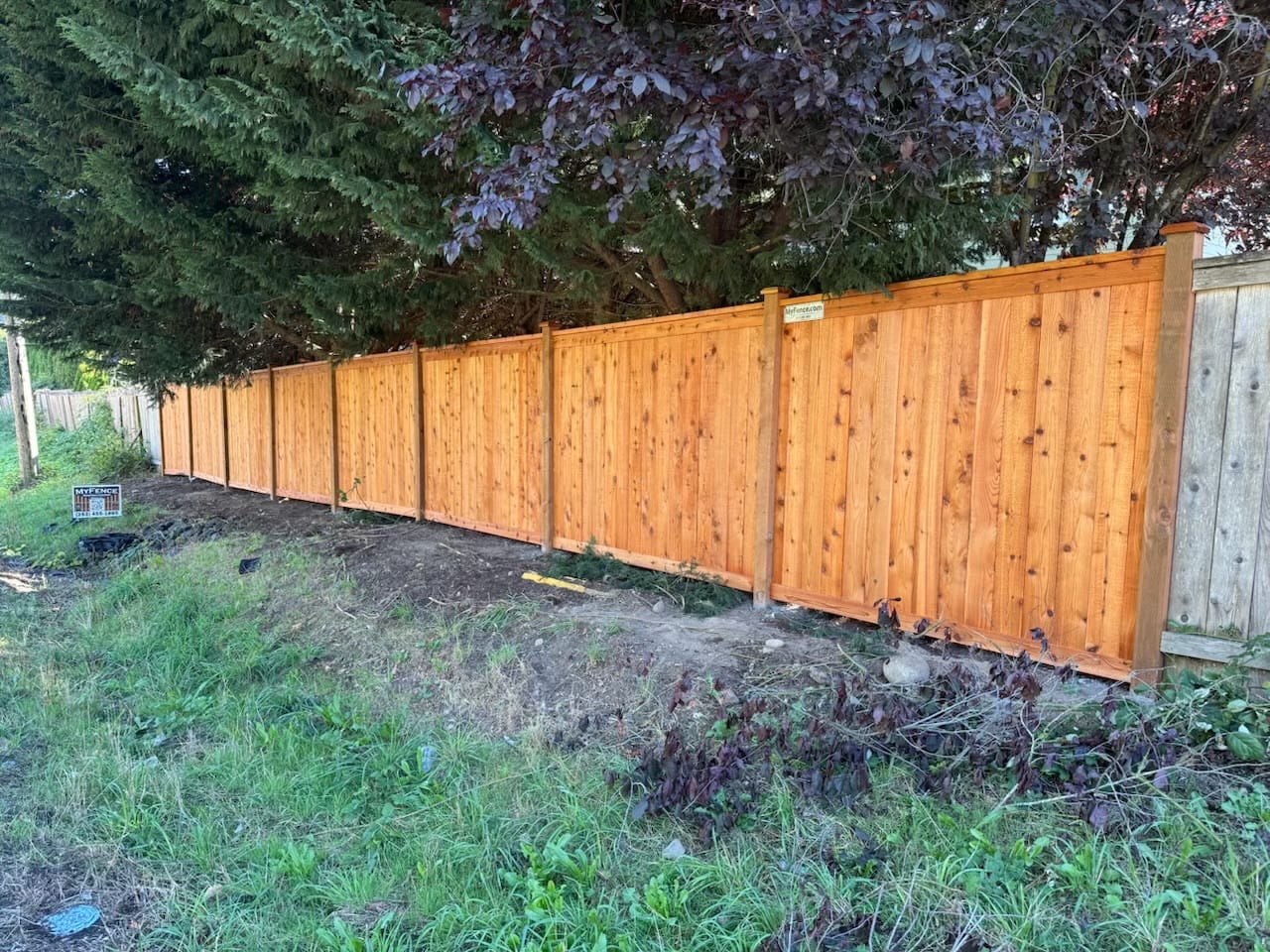
A stained cedar fence under heavy tree cover in Renton. Shaded runs like this dry slowly, so ground clearance and finish matter even more.
How a wood fence fails, part by part
Fences rarely fail all at once. Knowing the usual order helps you spot trouble early.
1. Posts rot at the ground line
This is the classic Seattle failure. The post looks fine above the dirt, but an inch below grade the wood has gone soft. The fence starts to lean, and a windstorm finishes the job. The USDA also warns that a concrete collar finished at the surface can trap and hold water next to the post (USDA FPL), which is why how the concrete is shaped matters as much as whether you use it.
2. Bottom boards wick water
Boards that touch soil, grass or mulch soak up water through their end grain. The USDA notes that wood absorbs water through its ends much faster than through its sides, so board bottoms and rail ends decay first (USDA FPL).
3. Rails trap water
Horizontal rails catch rain on top and hold it in cracks and joints. The USDA bulletin says rails need more decay protection than vertical boards. A rail that rots can make good boards sag.
4. Fasteners corrode and stain
Plain steel nails rust and leave dark streaks on cedar. The USDA recommends corrosion-resistant nails such as stainless steel or aluminum, especially when the fence will be stained (USDA FPL). We go deeper on this in stainless vs galvanized fasteners for cedar fences.
5. Gates wear out first
A gate is a moving, cantilevered load hanging on one post. Sagging gates and loose hinges are often the first thing a homeowner notices, long before the rest of the fence is done. Here's how we build gates that stay square.
Build choices that add years
Most of a fence's lifespan is decided on install day. These are the upgrades we offer specifically because of Puget Sound conditions. Each links to a page with details and real job photos.
Get the wood out of the ground
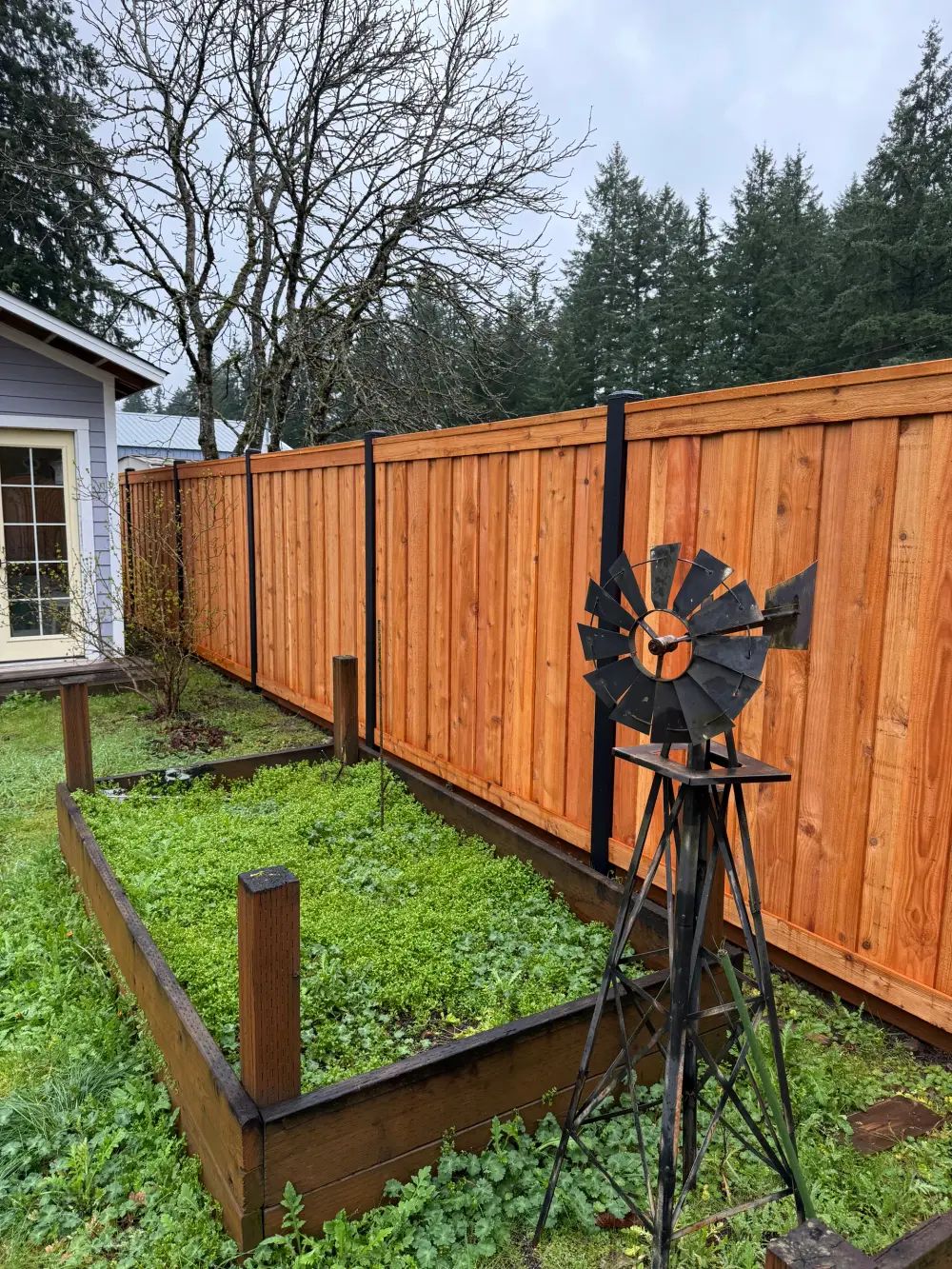
Black steel posts behind a cedar privacy fence in Kent, with no wood-to-soil contact on the fence line.
- Black steel posts: powder-coated 4x4 steel posts that can't rot, paired with cedar rails and boards. Our steel posts page lists the areas where we recommend them most often, including Enumclaw, Kirkland, Issaquah, North Bend and Maple Valley, plus any lot near lakes, rivers, wetlands or low spots.
- Post on pipe: a galvanized steel pipe goes in the concrete and the wood post sleeves over it above grade. No wood touches soil, and if a post ever needs replacing, a new one slides over the same pipe.
- Cedar post on pipe: the same idea with cedar posts, for an all-cedar look.
- Cedar-steel hybrid fence: corrugated steel panels framed in cedar, for homeowners who want far less wood exposed to the weather.
If you choose wood posts, protect the ground line
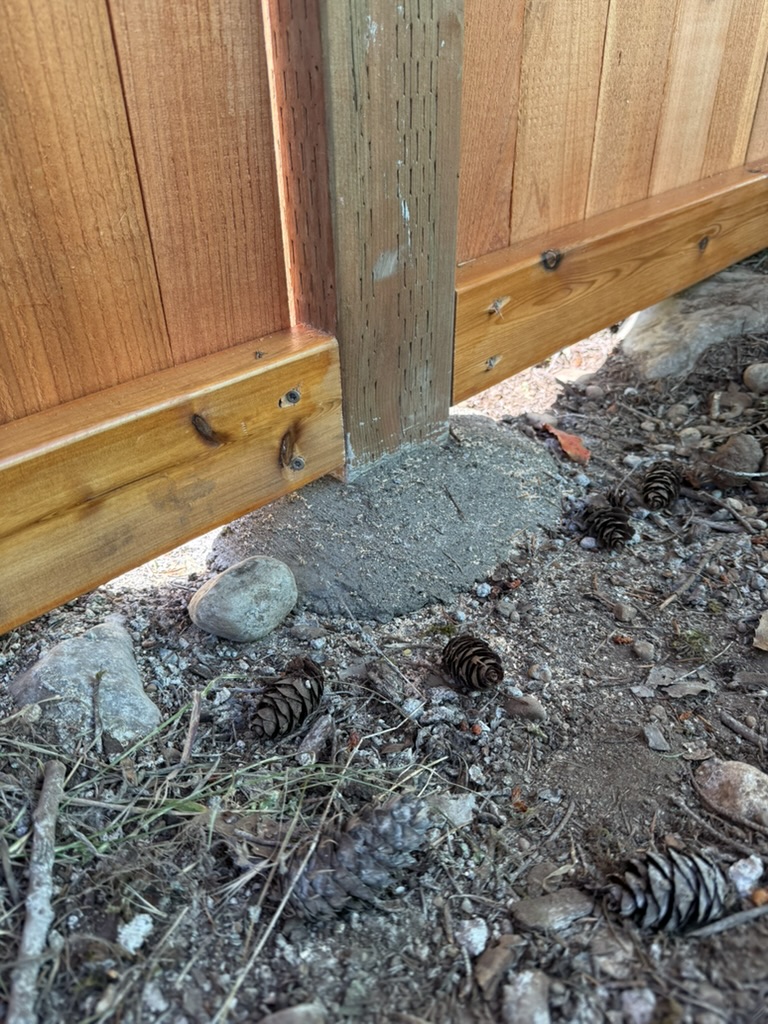
A mounded concrete footing: the dome sheds rain away from the post instead of letting it pool.
- Mounded concrete: instead of finishing the concrete flush with the dirt or cupped so it holds water, we bring the footing above grade and trowel a dome that sheds rain away from the post. This targets the same problem the USDA describes, water held against the post at the surface, by making sure water can't sit there. It doesn't replace proper depth, drainage, or keeping soil and mulch off the footing.
- Larger posts: our 4.125" posts have more cross-section than the 3.5" "4x4" sold at big-box stores. For bigger, heavier builds, see 6x6 posts.
Keep the boards off the soil
- Rot board: a pressure-treated 2x4 runs along the bottom of the fence, so the cedar never touches the ground. If anything gets wet and wears out, it's the inexpensive sacrificial board, not your panels.
- Leave clearance where the grade allows. Even without a rot board, keeping cedar above the soil and mulch line is one of the cheapest things you can do. The USDA's summary advice is simply "keep boards off the ground."
Seal every surface before it goes up
- Pre-staining: we stain the cedar components before installation, so the backs of boards, rail tops and tight joints get coverage you can't reach once the fence is built. Those hidden surfaces are exactly where water sits.
- Clear cedar: a premium board option with a cleaner, more uniform face that takes stain evenly.
Use fasteners that won't corrode
- Stainless steel ring-shank nails and staples on boards and mesh, to avoid corrosion streaks and loss of holding power. See our fastener guide.
- 4" exterior screws for attaching rails to posts.
Upgrades stack
The Kent fence at the top of this article combines several of these: steel posts, a rot board, pre-stained cedar, and a picture-frame design with board-on-board privacy. Each upgrade solves a different failure point, which is why they work best together.
A realistic Puget Sound maintenance routine
You don't need to baby a well-built fence, but a little attention in the right season goes a long way.
| When | What to do | Why |
|---|---|---|
| Early fall | Clear leaves, needles and soil off the base; trim plants back from the fence | Keeps the bottom dry through the wet season |
| After big winter storms | Walk the line; push on posts and check gates | Catches leaning posts and loose hinges early |
| Late spring | Rinse off moss and mildew gently; avoid high-pressure blasting | Removes growth that holds moisture against the wood |
| Summer | Aim sprinklers away from the fence; check downspouts | Gives the wood a real chance to dry out |
| Dry stretch every few years | Re-stain cedar | MyFence's fence staining guide recommends about every 3–4 years in Seattle's wet climate |
Don't bury your footings
New landscaping is one of the most common ways a good fence gets shortened. Piling bark, soil or rockery against posts and bottom boards undoes rot boards, mounded concrete and ground clearance in one weekend.
For a deeper look at products and finishes, read our guide to the best wood fence treatments for Seattle's climate.
Repair or replace? A checklist
Age alone doesn't tell you much. Instead, look at what's failing and how much of it there is.
Usually a repair:
- One or two leaning posts on an otherwise solid fence
- A sagging gate (often fixable with re-hanging, bracing or new hardware)
- A few cracked or loose boards
- Gray, weathered boards that are still firm (that's mostly cosmetic and may just need cleaning and stain)
Time to think about replacement:
- Several posts are soft at the ground line or rock when you push them
- Rails are rotting, so boards sag between posts
- The bottom of the fence is soft along long runs
- You're repairing something every season
- You want to change height, style or layout anyway
Quick post test
Push a screwdriver into the post right at soil level. If it sinks in easily or the wood crumbles, that post is decaying where it matters most. If most posts fail this test, a full replacement on rot-proof posts usually makes more sense than chasing repairs.
If you are replacing a fence, check the rules first. Our guides cover how close a fence can be to the street in Seattle and who owns a boundary fence.
FAQ
How long does a cedar fence last in Seattle?
The Seattle Times puts cedar at roughly 15–30 years in the Northwest (source). Where a fence lands in that range depends mostly on the posts, ground contact, drainage and upkeep. Wet, shaded lots with wood posts in clay soil tend toward the low end. Fences built with steel posts or post on pipe take the most common failure point out of the equation.
Why do fence posts rot before the boards?
Decay fungi need moisture and oxygen, and the place a buried post has the most of both is right at the ground line (USDA FPL). Boards above ground get to dry out between rains. A post at grade often doesn't.
Are steel posts worth it for a cedar fence?
If your yard is wet, low-lying, shaded or near water, steel posts remove the part of the fence most likely to fail first. You still get the look of cedar boards and rails. See black steel posts and post on pipe to compare options.
Does staining really make a fence last longer?
A finish helps cedar shed water and slows weathering, and the USDA recommends water-repellent and preservative finishes for above-ground fence parts. Staining can't fix a post rotting below grade, though. That's why finish and structure work together. Pre-staining also reaches surfaces you can't stain after the fence is built.
Is pressure-treated wood better than cedar?
They do different jobs. Wood treated and stamped for ground contact is designed to sit in soil, while cedar is prized for stability and looks above ground. Many durable fences use treated or steel members at the ground and cedar where you see it. Our rot board upgrade is one example.
My fence is gray. Does it need to be replaced?
Not necessarily. Graying is the surface weathering of unfinished wood. If the boards are still firm and the posts are solid, cleaning and re-staining may be all it needs.
How do I get a fence that lasts as long as possible?
Start with the structure (steel posts or post on pipe), keep wood off the soil (rot board), seal every surface (pre-staining), use stainless fasteners, and keep the base clear of soil and mulch. We'll talk through which of these fit your lot and budget during your estimate.
Build a fence for Seattle's weather
MyFence builds cedar fences across the Puget Sound region, from Seattle to Kent, Renton and Maple Valley. We design for our climate, with steel posts, post on pipe, rot boards, mounded concrete and pre-stained cedar among the options we'll walk through on your estimate. Browse fence styles, check our service areas, then get a free quote or call (253) 455-1885.
Sources
- USDA Forest Products Laboratory (De Groot, Feist, Eslyn, Gjovik), Protecting Wood Fences for Yard and Garden, University of Wisconsin-Extension, 1979 (Treesearch record)
- The Seattle Times, How to keep your wood fence looking beautiful
- MyFence.com, Fence staining, Steel posts, Mounded concrete