
Stainless Steel vs Galvanized Fasteners for Cedar Fences in Seattle
Why stainless nails and staples beat galvanized on cedar fences in Seattle's wet climate — and how that differs from MyFence's 4" exterior screw rail upgrade.
Seattle homeowners investing in cedar fencing care about longevity and appearance. The fasteners you choose — stainless steel vs galvanized — directly determine how your fence looks and performs in our wet Pacific Northwest climate.
Two different upgrades — don't confuse them
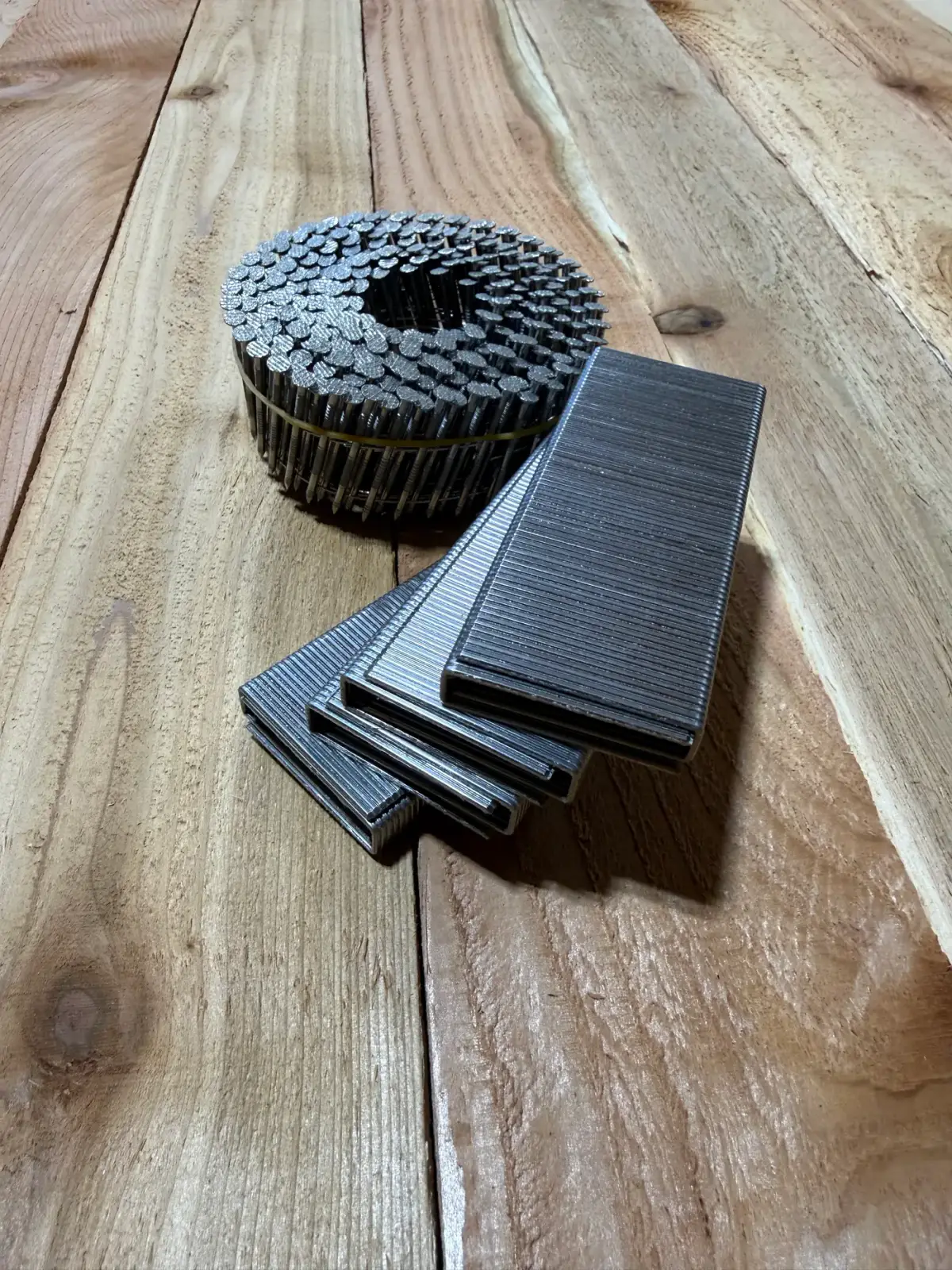
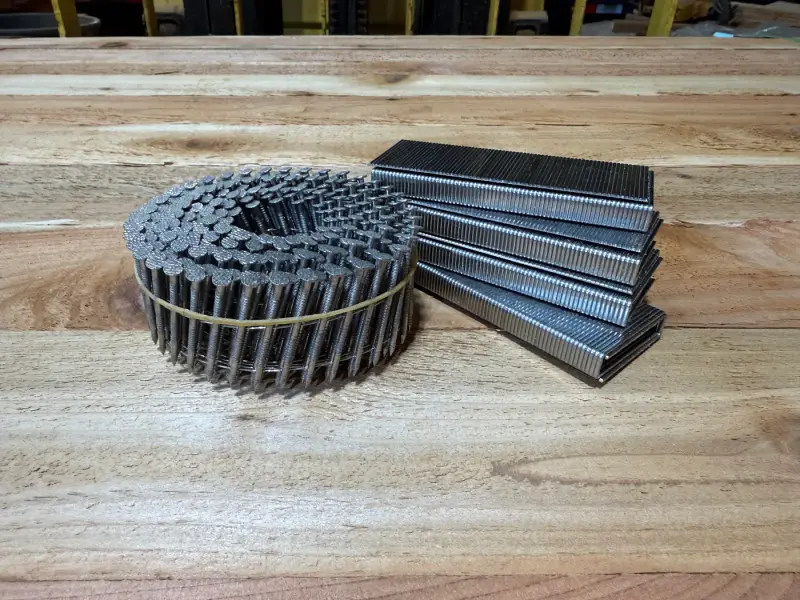
MyFence uses stainless steel ring-shank nails and staples for pickets, boards, and mesh so cedar doesn't get black corrosion streaks. Separately, we offer a 4" exterior screw upgrade for attaching 2x4 rails to posts. Nails and staples are not screws — and the product photos of stainless nails/staples are not the 4" rail screw upgrade.
Why Fasteners Matter So Much for Cedar Fences
Western Red Cedar is a premium fence material: naturally rot-resistant, dimensionally stable, and well suited to rainy Seattle weather. But even the best cedar fence can fail early or develop ugly black streaks if the wrong fasteners are used.
Industry guidance from cedar manufacturers and fastener experts consistently recommends stainless steel fasteners for cedar and redwood because of their resistance to corrosion and staining:
- Western Red Cedar technical guidance treats stainless steel nails as the best choice for cedar applications (Premier Forest Products cedar fastening notes).
- Fastener manufacturers recommend stainless for tannin-rich woods like cedar to avoid black staining (SPAX fencing applications).
- Outdoor hardware specialists prefer stainless in wet climates and with copper-treated or tannin-rich woods (galvanized vs stainless outdoor wood guide).
At MyFence.com, we design cedar fences specifically for Seattle's climate — and that starts with choosing the right fasteners for every part of the fence.
Why Galvanized Fasteners Fail on Cedar
Cedar, tannins, and metal corrosion
Cedar contains natural tannins and organic acids. These compounds can react with certain metals — especially ordinary or lightly coated galvanized steel — causing:
- Accelerated corrosion around fastener heads
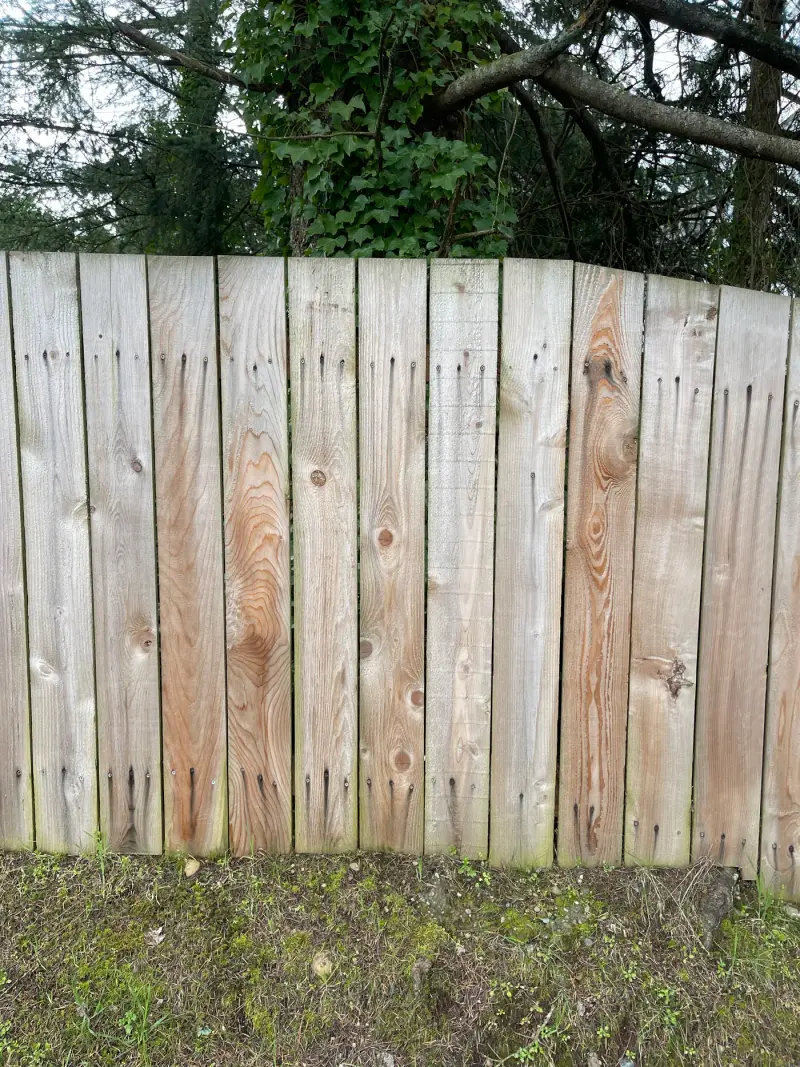
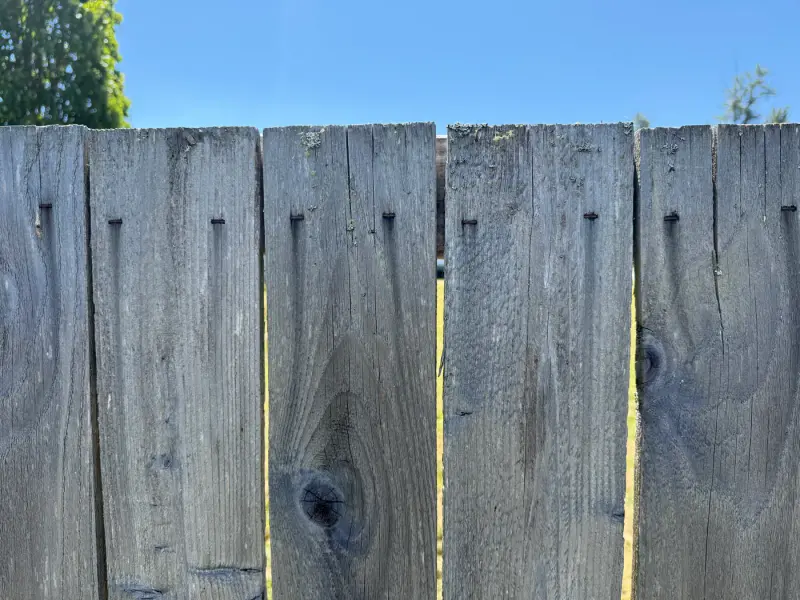
- Black or dark brown staining that runs down the face of boards
- Reduced holding power over time as the metal breaks down
Western Red Cedar technical guidance warns that electro-galvanized nails and staples can deteriorate rapidly and react with cedar's natural oils, producing unsightly stains and streaks (cedar fastening guidance PDF).
Building-science and research sources also note that:
- Galvanized coatings are sacrificial. Zinc slowly corrodes to protect the steel underneath; wet, acidic environments speed that up (USDA Forest Products Lab fastener corrosion research).
- Tannin-rich woods like cedar accelerate reaction. Fastener makers specifically call out cedar and redwood as woods where stainless is preferred (stainless vs galvanised outdoor screws).
In a dry interior climate, quality hot-dipped galvanized can be acceptable. In the Seattle metro, your cedar fence is repeatedly exposed to rain, mist, and soil moisture — and that combination makes galvanized fasteners a weak link.
What Those Black Streaks on Cedar Really Are
Many homeowners call us a few years after a cedar fence is installed elsewhere, asking why their boards have dark stripes running down from each nail or staple head. The short answer: metal corrosion and tannin staining.
Here's what's happening:
- Moisture penetrates around the fastener head.
- The zinc (galvanized coating) and underlying steel begin to corrode.
- Corrosion products (iron oxides) and dissolved metal ions react with tannins in cedar.
- The reaction produces dark, often black streaks that bleed down the board face.
Wood–fastener corrosion research from the USDA Forest Service and Forest Products Laboratory helps explain why metal choice matters so much outdoors.
Important points for Seattle homeowners:
- The stains are often permanent; sanding and bleaching may lighten them but rarely remove them fully.
- Staining tends to be worst on light, clear cedar and visible face-nailed fences.
- Once staining starts, it usually accelerates, because the corroding fastener allows more moisture in.
Choosing stainless steel nails and staples from day one is the most reliable way to avoid black streaking on cedar boards in our climate.
Stainless Steel Fence Fasteners: How They Work Better
Corrosion resistance in wet PNW conditions
Stainless steel fasteners are alloys containing chromium (and often nickel). Chromium forms a thin, continuous passive oxide layer that protects the metal underneath (USDA wood–fastener corrosion overview).
Unlike galvanized:
- Stainless protection is integral, not just a surface coating.
- Scratches or minor surface damage tend to self-heal as the passive layer reforms (outdoor stainless vs galvanized guide).
- Stainless maintains strength and appearance for decades in outdoor residential use.
Fastener and fence experts consistently recommend stainless for:
- Cedar and redwood, to prevent staining and corrosion (SPAX fencing guide)
- Treated woods with copper-based preservatives nearby, where galvanized coatings can fail faster
For the Pacific Northwest, stainless makes particular sense because the long wet season maximizes the time your fence spends damp. Regional climate normals from NOAA NCEI show why moisture-driven corrosion is a year-round design issue here — not a rare edge case.
Why MyFence uses stainless ring-shank nails and staples
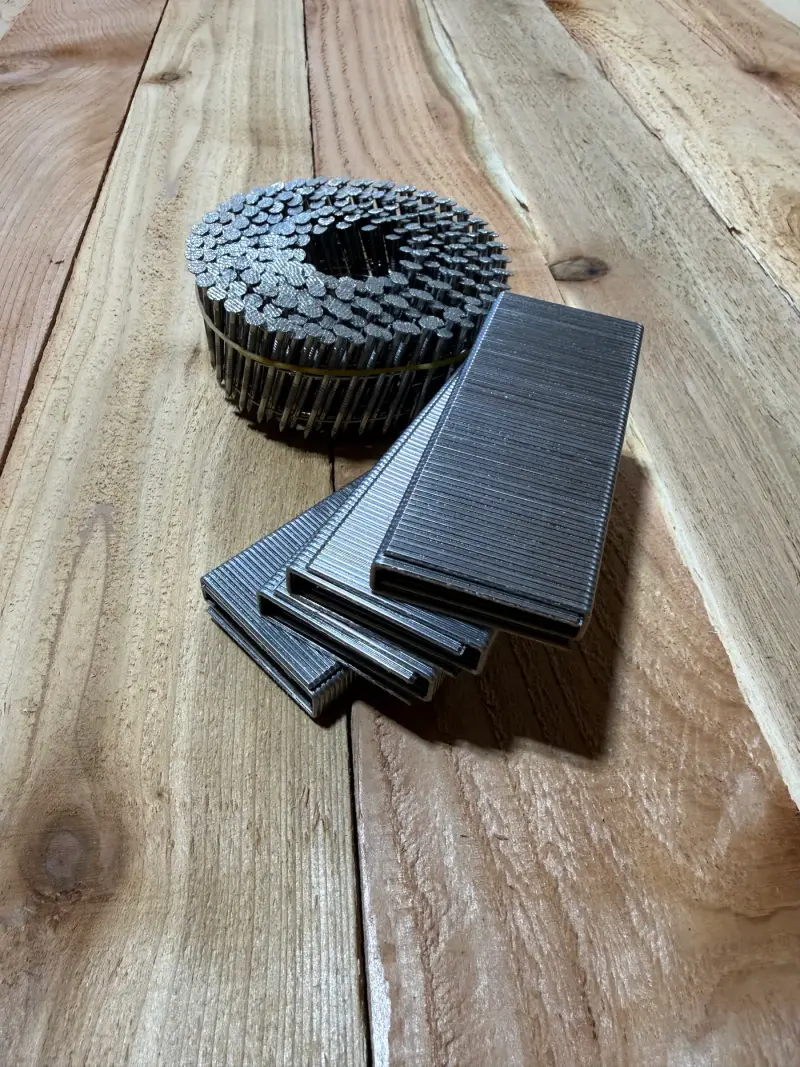
For cedar pickets, boards, and mesh attachment, MyFence specifies stainless steel ring-shank nails and staples:
- Ring-shank profile: Superior mechanical grip vs smooth-shank nails, reducing board loosening over time (wood fence fastener selection guidance).
- Stainless material: Eliminates rust and tannin staining in cedar applications (cedar fastening notes).
- Proper grade for exterior use: Chosen for wet-climate performance, not interior drywall hardware.
Cedar industry guidance is explicit that stainless steel nails are the best choice — and that galvanized staples are not recommended for Western Red Cedar (Premier Forest cedar fastening PDF).
Stainless Nails vs Stainless Staples: Use Cases on Cedar Fences
Stainless ring-shank nails
Best for:
- Face-attached cedar pickets and solid boards
- Decorative applications where the fastener head is visible, such as picture frame fences
- Areas where maximum holding power and withdrawal resistance matter
MyFence uses stainless ring-shank nails extensively on solid board fences and other styles where exposed fasteners need to stay clean and tight.
Stainless staples
Best for:
- Securing welded wire, hog wire, or other mesh to wood framing
- Attaching thin slats where a smaller footprint is desired
- Hidden fastening in certain design details
Because many cheap staples are only electro-galvanized, cedar manufacturers specifically warn against them for Western Red Cedar. Stainless staples avoid rapid coating failure, early loosening, and corrosion staining around each staple point.
How This Differs from MyFence's 4" Exterior Screw Rail Upgrade
Fasteners on a fence do different jobs. MyFence offers two separate fastener upgrades:
- 4-inch exterior screw rail upgrade
- Attaches horizontal 2x4 rails to vertical posts
- Stronger mechanical connection than standard nails
- Reduces rail loosening / nail pop-out over time
- Stainless steel ring-shank nails and staples (this article)
- Attach cedar pickets, boards, and mesh
- Prevent corrosion and black staining on cedar
| Upgrade | What it is | Primary job |
|---|---|---|
| 4" exterior screws | Structural screws into rails | Strength at rail-to-post connections |
| Stainless nails / staples | Corrosion-resistant picket/mesh fasteners | Appearance + longevity on visible cedar |
A well-designed cedar fence in Seattle benefits from both: strong rail attachments and stain-free picket fastening. See field photos and details on our exterior screws page.
Cost vs Value: Is Stainless Worth It?
Stainless fasteners cost more per piece than galvanized. For an entire residential cedar fence, though, the incremental hardware cost is usually a small fraction of the project budget, while the benefits are significant:
- Longer functional life of the fence
- Avoided re-fastening and board replacement years later
- Maintained curb appeal without black streaks or rust bleed
- Better long-term appearance on premium cedar
You're already investing in a premium material (cedar). Our climate amplifies galvanized weaknesses. Stainless is a one-time upgrade that protects that investment every rainy season.
When you request a quote from MyFence, we can outline how stainless fasteners and the 4" screw upgrade fit into your budget and expected lifespan.
What Seattle Homeowners Should Ask Fence Contractors
Before you sign a fence contract, ask specifically about hardware — many proposals focus on lumber and style, then gloss over fasteners.
Key questions:
- What fasteners will you use on cedar pickets and boards? Look for stainless steel ring-shank nails or staples. Red flag: vague “standard galvanized.”
- Are your staples stainless or just coated? Cedar manufacturers advise against electro-galvanized staples (cedar fastening PDF).
- How are rails attached to posts? Ask whether they offer a dedicated exterior screw rail upgrade.
- Can you show older local installs? Look for absence of streaking after several wet seasons.
- Does your fastener choice match cedar manufacturer recommendations? Western Red Cedar guidance favors stainless for exposed applications.
Browse MyFence fence styles to see how different designs combine with stainless fasteners for long-term visual appeal.
Stainless vs Galvanized Fasteners for Cedar Fences
| Feature | Stainless steel | Galvanized |
|---|---|---|
| Corrosion resistance in wet PNW | Excellent — integral passive layer | Moderate — sacrificial zinc wears down faster when wet/acidic |
| Reaction with cedar tannins | Minimal; recommended for cedar/redwood | Significant; known black staining risk |
| Risk of black streaks | Very low | High, especially electro-galvanized staples/nails |
| Holding power over time | Maintains strength as corrosion stays minimal | Declines as coating and steel corrode |
| Initial material cost | Higher per fastener | Lower per fastener |
| Long-term aesthetics | Clean heads, no bleed marks | Often streaking/rust in wet climates |
| Cedar manufacturer guidance | Best choice for Western Red Cedar | Electro-galvanized staples not recommended |
FAQ: Stainless vs Galvanized Fasteners on Cedar Fences
Do I really need stainless fasteners for a cedar fence in Seattle?
If you care about appearance and longevity, yes — stainless is strongly recommended. Cedar manufacturers, fastener makers, and fence professionals point to stainless as the safest choice for tannin-rich woods in wet climates (SPAX fencing applications).
Are “hot-dipped galvanized” nails good enough?
Hot-dipped galvanized is more robust than electro-galvanized, but it still relies on a sacrificial zinc layer. In a damp, acidic environment like Seattle cedar fencing, that layer still corrodes over time and can stain (USDA corrosion overview). For premium cedar, stainless remains the preferred option for exposed fasteners.
Will stainless fasteners rust or stain at all?
In typical residential fence conditions away from heavy marine spray or industrial chemicals, quality stainless shows very little visible corrosion over time (outdoor stainless vs galvanized guide). No fastener is immune to every environment, but stainless is far more resistant than galvanized on cedar.
Does using stainless affect the structure of the fence?
Positively. Because stainless resists corrosion, it maintains holding power longer than galvanized hardware that slowly loses section as it rusts. Combined with MyFence’s 4" exterior rail screws, you get strong rail-to-post connections and long-lasting picket/mesh attachment.
How can I get a cedar fence with stainless fasteners from MyFence?
Check whether your home is in our service areas, explore fence styles, then request a detailed quote. We’ll walk through stainless nails and staples, the 4" exterior screw system, and design choices for picture frame, solid board, and other cedar styles.