
Why Wood Fence Posts Warp, Crack, and Twist — and How Steel Posts Solve It
Pressure-treated and cedar posts are living materials. As moisture leaves the wood, movement is inevitable—and it is not something any installer can fully prevent.
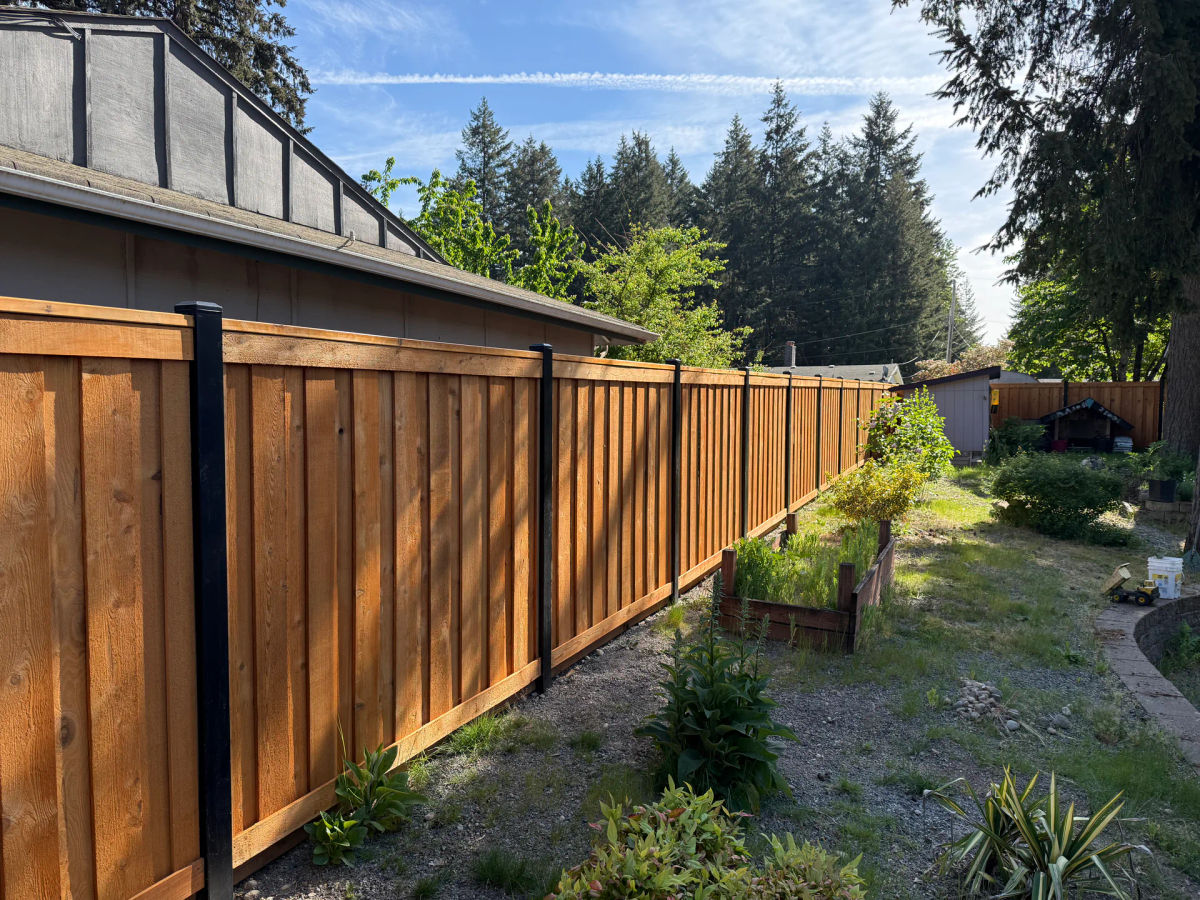
MyFence.com installation — cedar privacy panels on powder-coated 4×4 steel posts
Article Summary
Get an AI-powered summary of this article for quick insights and key takeaways.
Wood Posts Are Never Truly “Finished” Moving
A fence post looks solid when it leaves the lumber yard, but wood is still exchanging moisture with the air and soil around it. Cellulose fibers swell when wet and shrink when dry. Until the post reaches equilibrium with its environment—a process that can take months or years in the ground—the lumber is under internal stress.
That stress does not care how carefully a crew set the post in concrete. When one side dries faster than another, or a knot shrinks at a different rate than the surrounding grain, the post cups, bows, or twists. Homeowners across the Greater Seattle area see it every summer: a fence that was perfectly straight in spring develops a noticeable lean by fall.
What Causes Warping, Cracking, and Twisting?
Green wood and high moisture content. Many posts are sold while still carrying significant water weight—sometimes called “green” lumber. Once buried and exposed to alternating rain and sun, that moisture has to leave the post. The escape is rarely uniform, which is why movement shows up weeks or months after installation.
Knots and grain tension. Every knot marks where a branch once grew. That dense, irregular wood shrinks differently than straight-grain sections, creating pull points that twist the post. Mixed sapwood and heartwood in pine posts exaggerate the effect.
Uneven drying. In the Pacific Northwest, the south face of a post may bake in afternoon sun while the north face stays damp from shade or soil splash. One side shrinks; the other does not—producing cupping and bowing.
Surface checking. As the outer shell dries faster than the core, small cracks open along the grain. These checks are cosmetic at first but can widen over time and allow more water into the post, accelerating decay at the ground line.
Pressure-Treated vs. Cedar: Both Move, Just Differently
| Factor | Pressure-Treated Pine | Western Red Cedar |
|---|---|---|
| Typical moisture at purchase | Often saturated from treatment process | Variable; can still be above equilibrium |
| Grain consistency | Mixed sapwood/heartwood; more twist risk | More uniform, but knots still common |
| Warping tendency | Higher—dramatic bowing and twisting | Lower than pine, but not zero |
| Rot resistance | Chemical treatment helps below grade | Natural oils resist insects and decay |
Cedar is often chosen for posts because it handles moisture better than pressure-treated pine, but “better” is not the same as “stable.” A premium cedar post can still twist enough to pull fence rails out of alignment and stress picket fasteners. Pressure-treated posts, arriving heavy with treatment solution, frequently show the most visible movement during their first dry season.
Important: Warping and cracking are normal material behaviors for wood—not signs that the lumber was defective in a legal sense, but inherent traits of an organic product drying in place.
Why This Is Not a Contractor Liability Issue
What proper installation covers
- • Setting posts to correct depth (typically one-third of total length)
- • Plumb alignment at the time of install
- • Adequate concrete or aggregate backfill
- • Correct hardware and rail attachment
What installation cannot control
- • Internal drying rates inside the lumber
- • Knot-related grain tension releasing over time
- • Seasonal humidity swings in Western Washington
- • Checking and surface cracking along the grain
Reputable fence companies warranty their workmanship—how posts are set, how panels are built, and how hardware is installed. They do not warranty the long-term dimensional stability of a tree that was cut into a 4×4. When a homeowner calls about a post that twisted six months after a correct install, the underlying cause is almost always wood movement, not crew error.
MyFence.com backs every installation with a 36 month warranty on all installations. That covers our build quality—not the natural behavior of organic lumber after it leaves our shop.
How Post Movement Affects Your Whole Fence
Posts are the skeleton of the fence. When a post twists even a few degrees, rails no longer run level. Pickets or slats attached to those rails inherit the distortion—gaps open at the top, boards bind at the bottom, and gate hardware binds because the latch side has shifted.
On sloped lots common in Bellevue, Issaquah, and Seattle hillside neighborhoods, a leaning post can look like a grading problem when it is actually lumber shrinkage. The cosmetic fix—shimming rails or re-drilling pickets—does not address the root cause. The post itself has changed shape.
See it on a real fence line
This short field clip shows what uneven drying does to wood posts over time—and how powder-coated steel posts on the same run stay plumb while cedar boards do their job above grade.
The Solution: 4×4×9 Powder-Coated Steel Fence Posts
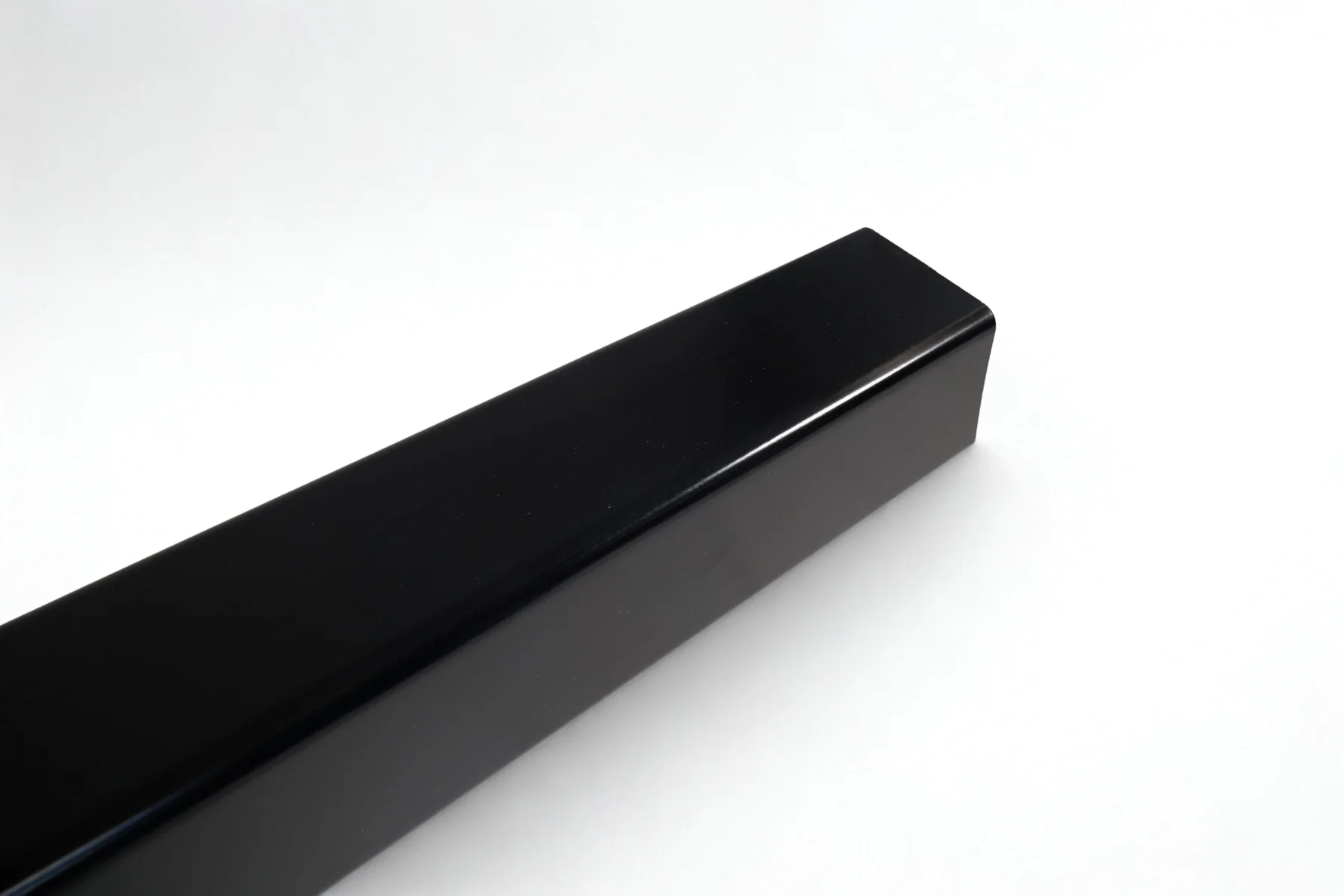
Steel eliminates the entire category of problems caused by drying wood. A 4×4×9 steel fence post does not absorb rainfall, does not swell in humid summers, and does not shrink when a dry east wind blows through the Snoqualmie Valley. It stays the shape it was on installation day.
Why homeowners upgrade to steel posts
MyFence.com sets 9-foot steel posts 24 inches in concrete for standard 6-foot privacy fences—the same depth and spacing discipline we use for wood, but with a post that will not re-shape itself afterward. For fences with lattice toppers, 12-foot steel posts are also available.
Steel posts pair cleanly with cedar board-on-board privacy fences, horizontal slat designs, and our Cedar/Steel Hybrid Fence system for homeowners who want a fully coordinated steel-and-cedar aesthetic.
Frequently Asked Questions
Can I stop a wood post from twisting after it is installed?
You can slow moisture exchange with end-grain sealers and proper drainage at the base, but you cannot eliminate internal drying stress in a post already in the ground. Once significant twist is present, replacement is usually the only structural fix.
Should I use cedar or pressure-treated posts if I stay with wood?
Cedar generally moves less and looks better above grade, while pressure-treated pine is the budget choice for below-grade rot resistance. Neither option delivers the long-term straightness of steel. If post movement is a top concern, upgrade at the outset rather than replacing later.
Will steel posts look out of place on a cedar fence?
Black powder-coated posts are deliberately slim and matte—they read as a modern accent rather than industrial hardware. Many Seattle-area homeowners choose them specifically for the contrast against natural cedar tones. See examples on our steel posts page.
How does this compare to your steel vs. wood post article?
Our steel vs. wood post comparison focuses on long-term cost and rot in wet soil. This article focuses on dimensional movement—why wood twists and how steel removes that variable entirely.
Want Posts That Stay Straight?
Ask about 4×4×9 steel posts on your next quote. We will price wood and steel side by side so you can choose with full context—before twisting becomes someone else's problem.