Onsite Fence Staining Problems vs Pre Staining Components
At MyFence.com we properly dry every board, then stain all uncut sides before assembly. Here’s why pre staining beats onsite staining in Seattle’s wet, unpredictable weather.

At MyFence.com we are properly drying all fence boards and components, then individually staining all uncut sides for total stain and sealing. Drying the material first, ensures that the stain is adequately absorbed into the wood.
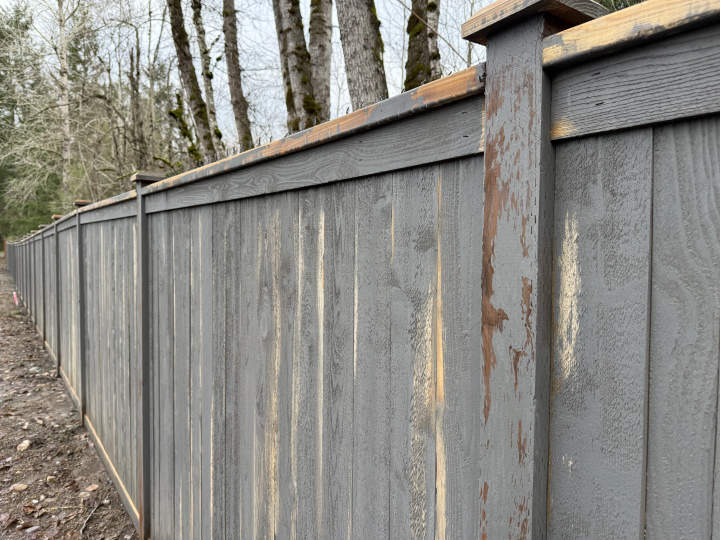
The issue with onsite staining after the fence has been built, is you can only spray onto the visible surfaces. The hidden surfaces between the fence boards and behind the hidden components are no longer able to be stained. Leaving you with a weak point in your fence. Not to mention there can be onsite staining complications. Such as freak rain storms, cold snaps, or overnight dew which can impact or ruin the initial stain applied to the cedar fence.
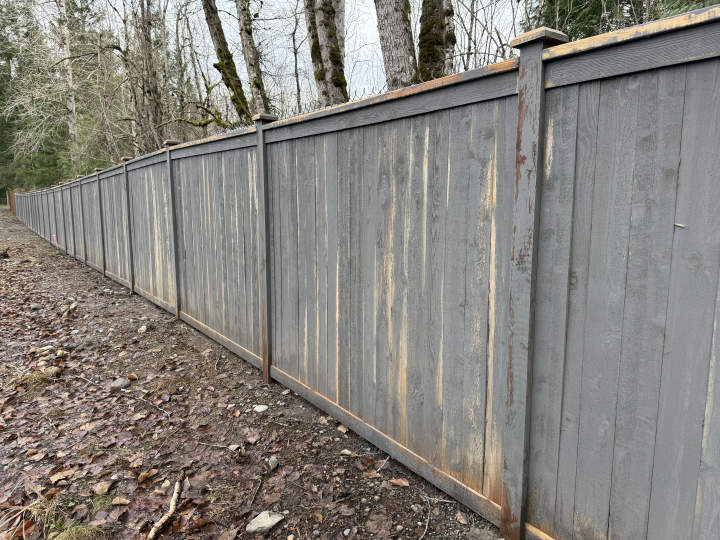
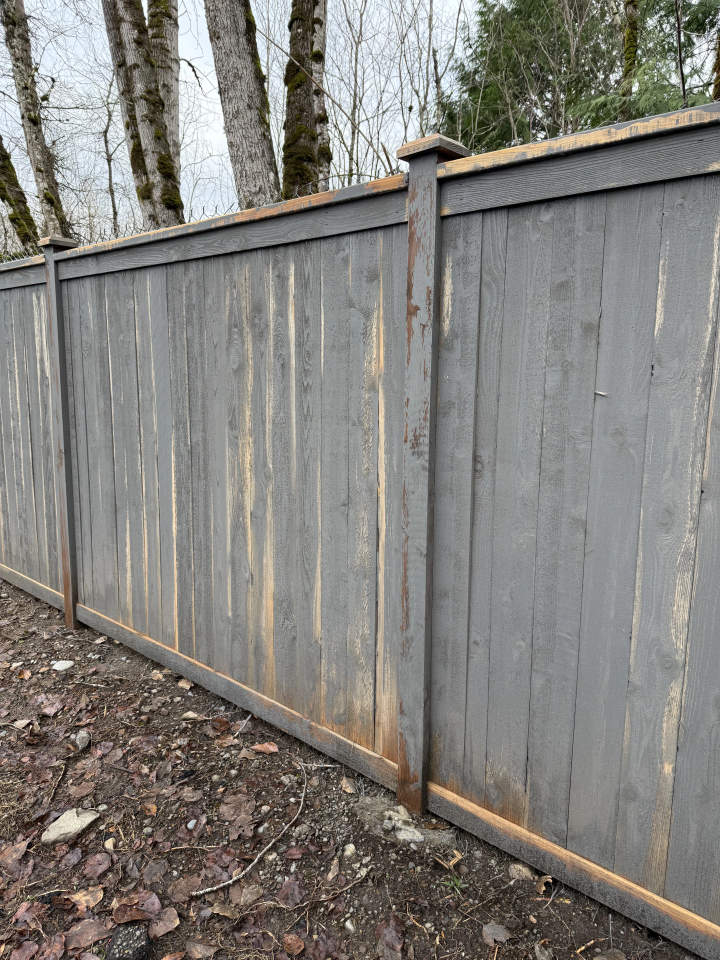
Real-world failure
The photos above show peeling film and blackened boards—classic signs of stain applied before panels were dry. Re-sanding and re-staining costs more than getting it right the first time.